Exploring Night Rain: Early DLC Impressions, Builds, and Survival Tips from the Front Lines
Jumping into fresh Elden Ring DLC content always feels a bit like being tossed into the deep end without a map. Night Rain is no exception. After spending a solid session testing the new area, enemies, and systems, I want to break down what actually matters for regular players: what works, what kills you instantly, and how to make sense of the chaos without burning all your runes every ten minutes.
This isn’t a clean, perfectly optimized run. It’s more like what most of us experience on day one: weird drops, insane damage spikes, accidental deaths, and moments where the game suddenly rewards you way more than expected.
First Impressions of Night Rain
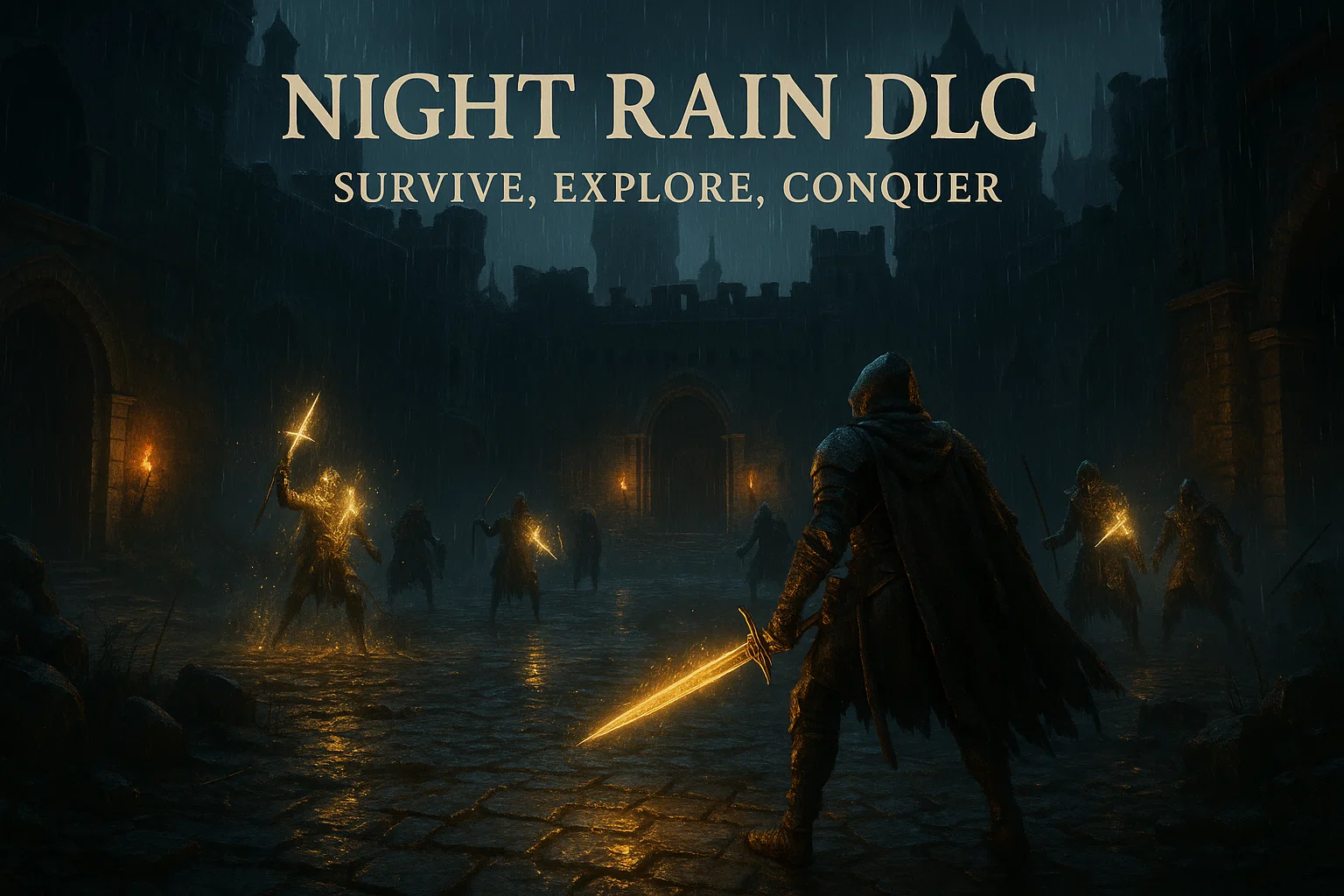
Night Rain immediately sets a different tone compared to the base game. The area design feels dense and dangerous, but also strangely generous. Enemies can hit absurdly hard even at low levels, yet the rune payout is noticeably higher than what you’d expect this early.
One thing that stands out right away is how fast things escalate. You can go from level 11 to the mid-teens almost instantly if you survive a few encounters. At the same time, many enemies have attacks that will one-shot you regardless of confidence or positioning. This creates a tense loop where exploration feels exciting but constantly risky.
The environment also encourages wandering. Hidden paths, vertical drops, and branching routes make Night Rain feel more like a puzzle box than a straight dungeon. If you enjoy exploration-heavy zones, this area definitely delivers.
Combat Feels Familiar, But Punishes Mistakes Harder
Mechanically, Night Rain doesn’t reinvent Elden Ring combat, but it amplifies existing systems. Jump attacks are especially noticeable here. Testing different setups showed a clear increase in jump attack effectiveness, sometimes reaching around a 17 percent boost depending on buffs and timing.
Rolling attacks and positioning also matter more than usual. Several enemies punish frontal aggression, forcing you to circle, bait attacks, and strike from behind. Even then, overcommitting is dangerous. One mistimed dodge can erase a good run instantly.
Holy damage deserves special mention. Multiple encounters suggest that holy-based builds perform extremely well in this DLC segment. Against certain enemies, holy damage output feels significantly higher than physical alternatives, making faith-oriented setups surprisingly strong early on.
Enemy Design: High Risk, High Reward
Night Rain enemies fall into two main categories: fragile but lethal, or tanky and oppressive. Some standard mobs drop 5,000 to 10,000 runes, which feels almost unreal early on. Others barely take damage and seem designed to drain your resources rather than reward you directly.
There are also mini-boss-style enemies scattered throughout the area. These fights often feel unfair at first, especially when scarlet rot or explosive effects enter the picture. Still, they tend to guard valuable loot or large rune payouts, making them worth learning.
That said, not every fight is meant to be taken head-on. Knowing when to disengage is part of surviving Night Rain.
Managing Runes Without Losing Your Mind
Because rune gains are so high, losing them hurts more than usual. One mistake, one bad fall, or a grab attack can wipe out tens of thousands instantly. This makes rune management crucial.
Some players choose to slow down, banking levels whenever possible. Others take a more aggressive approach, farming specific enemies that drop large amounts quickly. For players who don’t have time to repeat risky runs, I’ve seen discussions around people choosing to buy elden ring runes as a way to keep up with DLC scaling without burning hours on recovery attempts. It’s not something everyone needs, but the pressure Night Rain puts on progression makes the temptation understandable.
Exploration Is Worth the Risk
Despite the danger, exploration is one of Night Rain’s strongest points. Hidden chests, unexpected enemy encounters, and strange visual effects make the area feel alive and unpredictable. Some locations reward you simply for poking around, even if you don’t fully clear them.
There are moments where exploration clearly outpaces combat efficiency. Finding a chest or triggering an event can net more runes than several enemy fights combined. If you enjoy discovery over brute force, this DLC supports that playstyle well.
Just be careful with vertical movement. Falls are brutal, and recovery paths aren’t always forgiving.
Build Flexibility and Weapon Drops
Weapon drops in Night Rain feel experimental. You might get something perfectly aligned with your build, or something completely useless. Scarlet rot weapons, holy-infused hammers, and unusual hybrid tools appear frequently, encouraging experimentation.
Even if a weapon doesn’t scale perfectly, it may still be worth testing due to unique effects. Some weapons shine purely because enemy resistances favor them in this area.
If your build feels underpowered, it’s not necessarily a mistake. The DLC seems designed to push players into adapting rather than sticking rigidly to one setup.
When Difficulty Spikes Feel Unfair
Let’s be honest: some deaths in Night Rain feel cheap. Grabs that one-shot regardless of health, enemies that chain attacks endlessly, and cramped spaces that limit camera control can all lead to frustration.
This is where preparation matters more than raw skill. Entering fights with buffs active, flasks managed, and escape routes planned makes a massive difference. Players who rush in tend to lose everything faster.
For those struggling to keep up with difficulty scaling, some opt to buy elden ring runes online to stabilize their progression before tackling tougher sections again. Communities often mention platforms like U4GM in these conversations, usually as a way to reduce grind rather than gain an unfair advantage. Whether that’s right for you depends on how you prefer to experience Elden Ring’s challenge.
Co-op and Shared Discovery
Playing Night Rain alongside another player highlights how chaotic and fun the area can be. Splitting aggro, sharing discoveries, and reacting to unexpected events makes the experience feel more dynamic.
Co-op also reveals just how inconsistent damage can be between builds. Watching one player melt enemies while another struggles emphasizes how important damage type and timing are in this DLC.
If you’re planning to explore Night Rain with friends, communication matters more than usual. Calling out enemy patterns and escape routes can save a run.
Night Rain feels like a raw, experimental slice of Elden Ring DLC design. It’s dangerous, generous, confusing, and occasionally unfair, but also exciting in a way that reminds you why exploration matters. High rune rewards tempt you to push forward, while brutal enemies force you to respect every encounter.
Find Out More: Elden Ring Sorcery Tier List 2025